
01 · Anatomy of the cap
Anatomy of the cap
Every premium cigar has a cap. The cap is a small piece of wrapper leaf glued over the head of the cigar to seal the bunch and keep the wrapper from unraveling. When you cut a cigar, you are removing just enough of the cap to expose the filler underneath. Cut too deep and the wrapper unravels in your mouth. Cut too shallow and the draw is tight.
The shoulder of the cigar is the curve where the cap meets the straight body. Aim your cut about an eighth of an inch above the shoulder, never below it.
02 · The three cuts
The three cuts
Three tools. Three styles. All three are valid. Pick by mouthfeel, not by reputation.
- Guillotine cut. A two-blade cutter that slices straight across the cap. The default. Works on every shape. Buy a sharp one with stainless steel blades. A dull cutter will tear the wrapper.
- V-cut. A wedge-shaped blade that scores a V into the cap. Concentrates draw, exposes more tasting surface, and works particularly well on Robustos and Toros. Some people find it more flavorful.
- Punch cut. A small cylindrical blade that cores a hole in the cap. Concentrates draw the most, very little risk of unraveling. Works on shapes with a flat cap. Will not work on torpedoes or perfectos.
03 · Two acceptable flames
Two acceptable flames
Butane torch lighter. The modern default. Jet flame, hot, clean, no flavor. Toast the foot in fifteen seconds. Double and triple flame torches finish faster but are easier to scorch with. A single-flame jet is plenty for most cigars.
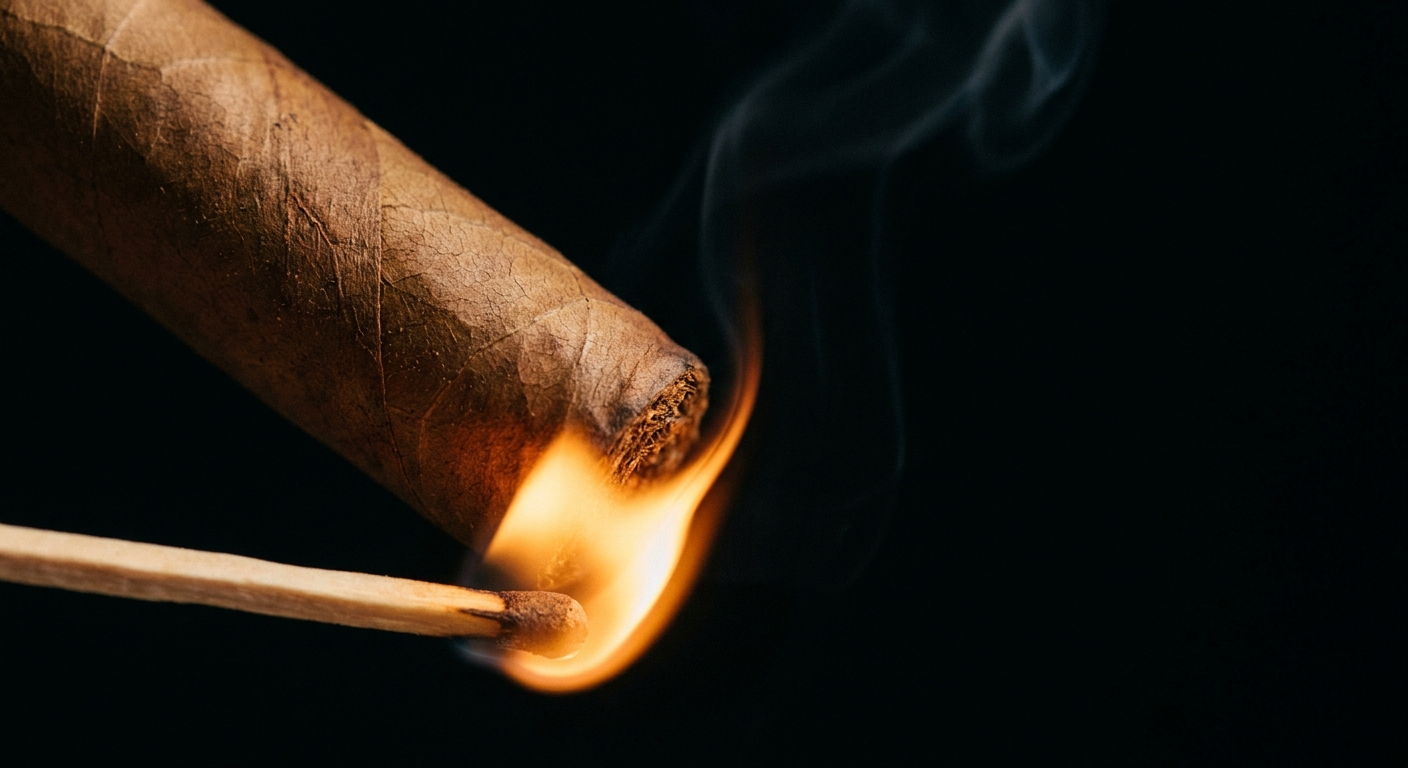
Wood matches or cedar spills. The traditional method. Light a long wooden match or a thin strip of cedar called a spill, let the sulfur or chemical taste burn off for five seconds, then toast. Slower, more ceremonial, no chemical flavor on the foot.
Things that do not work. Zippo lighters introduce a fuel taste that ruins the first inch of the smoke. Paper matches burn out too fast and add their own taste. Birthday candles, gas stoves, BIC lighters in a pinch all introduce off flavors. Stick to butane or wood.
04 · The process, step by step
The process, step by step
Once you have the cigar in hand, the cutter ready, and the lighter loaded, here is the sequence.
- Inspect the wrapper. Look for cracks or soft spots. A fresh, oily wrapper is what you want.
- Smell the foot. The unlit aroma tells you what is coming. Earthy, sweet, peppery, leathery. Take note before you light.
- Cut the cap. One firm motion. Slice an eighth of an inch above the shoulder. Do not chew the cap.
- Toast the foot. Hold the cigar at a 45 degree angle, flame an inch below the foot, slowly rotate. The goal is to scorch the foot evenly without putting flame directly on the leaf. Twenty seconds, maximum.
- Take a slow draw with the flame still hovering near the foot. The cigar should catch and the foot should glow red across its entire diameter.
- Inspect the foot. If one side glows brighter than the other, touch it up with another five seconds of flame on the slow side. An even light is the foundation of an even burn.
- Set the lighter down. Take a gentle first draw. The first inch will be the spiciest, the next two inches will mellow, the back half will sweeten and deepen.
05 · Common mistakes
Common mistakes
Cutting too deep. The wrapper unravels in your mouth. Once it starts, you cannot reverse it.
Lighting too aggressively. Jamming the flame onto the wrapper scorches it and tastes like char for the first five minutes.
Drawing too hard. A premium cigar should pull with gentle effort, like a thick milkshake through a wide straw. If you have to suck hard, the cigar is too humid or the cut was too shallow.
Relighting an old cigar. If you set a half-smoked cigar down for an hour, the tar will have settled and the relight will taste sharp. Better to finish it in one sitting or save the second half for the next day after a fresh cut.