
01 · Two categories, two business models
Two categories, two business models
The cigar industry runs on a long spectrum, but most of what you see on a humidor wall lands in one of two camps. On one side, large companies that own multiple brands, distribute internationally, and produce tens of millions of cigars a year. On the other, family-owned houses that produce thousands to hundreds of thousands of cigars a year and rarely leave the regions where they were founded.
Both make good cigars. Both make bad cigars. The difference is not quality versus garbage. The difference is in how the cigars are sourced, aged, and constructed, and what that translates into in your mouth.
02 · Five real differences
Five real differences
Five things separate boutique from mass-market. Almost every marketing distinction you have heard either reduces to one of these or is decorative.
What changes between boutique and mass-market
| Dimension | Boutique | Mass-market |
|---|---|---|
| Tobacco sourcing | Grown or sourced by the house, often from owned fields | Purchased from large brokers across multiple harvests |
| Aging | 3 to 10 years in bale before rolling, then rest before sale | 12 to 36 months in bale, often sold soon after rolling |
| Rolling | Hand-rolled by experienced torcedores in small teams | Hand or machine-bunched, hand-rolled wrapper, large teams |
| Annual volume | 5,000 to 500,000 cigars of a given line per year | 5 million to 50 million cigars across multiple lines |
| Distribution | Regional, often skipping non-specialty retailers | National chains, drug stores, online discounters |
03 · Boutique houses worth knowing
Boutique houses worth knowing
Several boutique families sit at the top of the premium cigar conversation. We carry most of them in Buford because their cigars consistently smoke above their price.
Oliva is the family that built modern Estelí, Nicaragua. Their Serie V Melanio has won multiple Cigar Aficionado top-cigar awards. The Serie V uses tobacco grown on Oliva-owned fields and aged a minimum of three years before rolling. A Serie V Robusto runs about fifteen dollars and smokes like a cigar that costs twice as much.
Plasencia farms more tobacco than almost anyone else in Nicaragua and Honduras. Until recently they were a tobacco grower selling leaf to other houses. The Alma Fuerte and Alma Del Campo lines are entirely in-house, with field-to-cigar control that almost no other company can claim.
Tatuaje and My Father, both run by the Garcia family in Estelí, produce small batches of full-bodied Nicaraguan cigars with a cult following. Limited annual production, regional distribution, and an emphasis on aged ligero leaf in the filler.
Arturo Fuente has been family-run in the Dominican Republic for four generations. They are larger than most boutiques but operate like one. The Hemingway line, with its perfecto shape and Cameroon wrapper, is one of the most consistent premium cigars in the world.
04 · Mass-market does not mean bad
Mass-market does not mean bad
Several large companies make excellent cigars at competitive prices. Recognizing what they do well and what they do not is part of being an informed buyer.
Rocky Patel runs at boutique-adjacent volumes with strong consistency. The Vintage 1992 and Vintage 1999 lines use genuinely aged wrapper leaf and deliver premium experience at twelve to fifteen dollars. We carry several Rocky Patel lines and recommend them often.
General Cigar, owner of Macanudo, Punch, and Partagas, supplies most American drug stores and chain tobacco shops. The big-volume Macanudo Cafe is reliable, mild, and consistent, and serves as an honest introduction cigar for many first-timers, even if it lacks the depth of a small-batch house.
Altadis USA owns Romeo y Julieta, Montecristo, and several other historic names. The Reserva Real and 1935 Anniversary lines deliver premium quality with modern blending. Their entry lines are widely distributed and rarely interesting.
05 · What the price difference actually buys
What the price difference actually buys
A five-dollar mass-market cigar buys you tobacco that was harvested, aged 18 months, rolled in volume, and shipped in fresh boxes within a year of the field. The cigar will burn, taste like a generic premium cigar, and deliver an honest hour of smoking.
A fifteen-dollar boutique cigar buys you tobacco that was harvested, aged three to five years in bale, hand-bunched by an experienced torcedor, hand-rolled with the same wrapper leaf the company has used for a decade, and rested in cedar before sale. The cigar will taste specifically like itself, with notes you can identify across multiple smokes from the same box.
Pay the extra ten dollars for a Saturday night cigar with a bourbon. Keep a few five-dollar mass-market sticks around for Tuesday afternoon yardwork. Both have a place.
06 · How to tell a boutique cigar at a glance
How to tell a boutique cigar at a glance
Three quick visual cues. Look at the box. A boutique box almost always lists a year, a region of origin, and a vitola count. A mass-market box lists a brand and a count, sometimes with marketing copy.
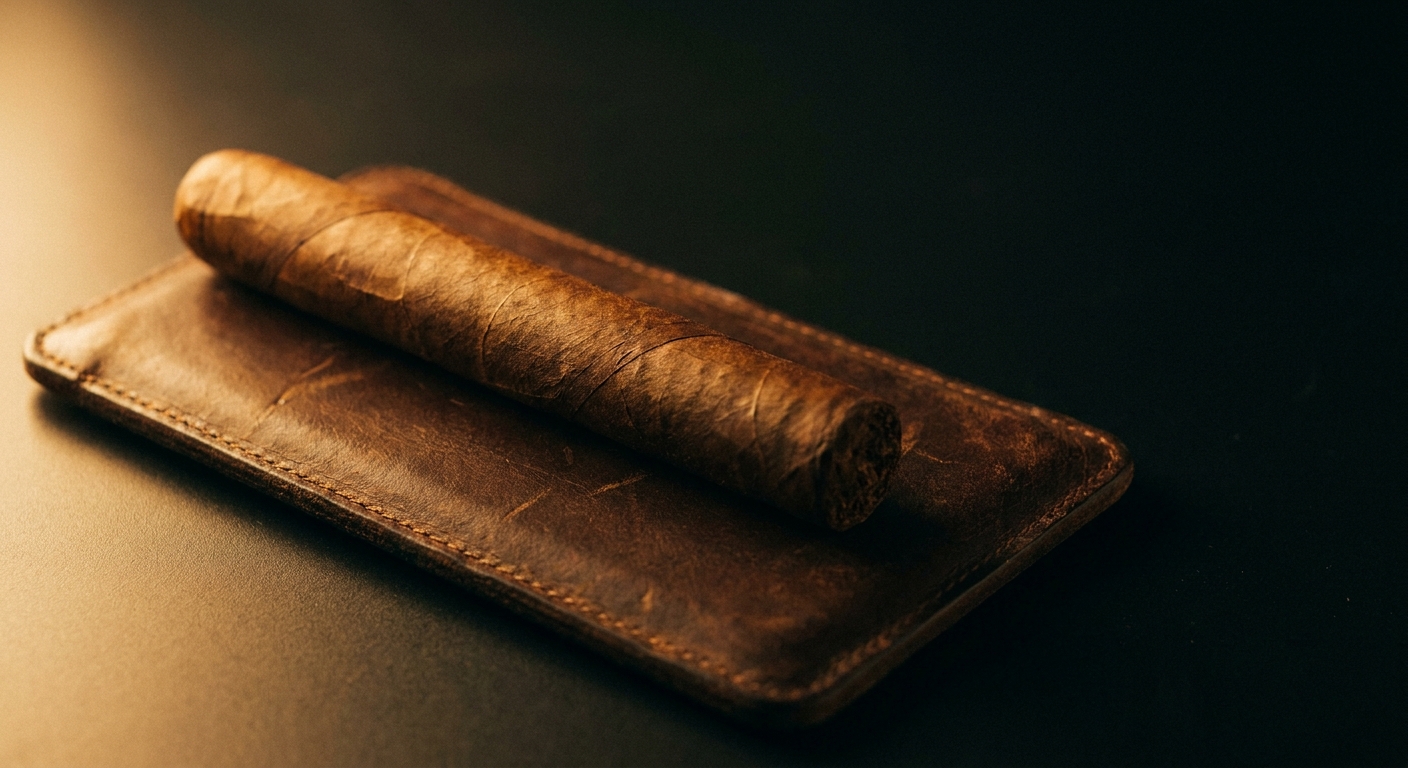
Look at the wrapper. A premium boutique wrapper shows oil, fine veins, and a slightly uneven color that comes from natural curing. A mass-market wrapper is more uniform, smoother, and often has a slightly waxy gloss from accelerated curing.
Look at the foot. The cut at the foot of a boutique cigar shows three filler leaves visible in section, with distinct color variation between the ligero, seco, and volado layers. A mass-market cigar often shows a more uniform fill or a short-filler interior.