
01 · The five things that actually matter
The five things that actually matter
Most towns have several places that sell cigars, and they are not the same. A gas-station rack, a vape-and-tobacco counter, and a dedicated premium humidor all put a cigar in your hand, but only one of them keeps that cigar in the condition the blender intended. Learning to tell them apart takes about five minutes of paying attention.
Ignore the marketing and judge a cigar shop on five things. Each one is easy to check on your first visit, and together they tell you whether a shop is worth your regular business.
What to judge, and how to check it
| What to judge | The quick test |
|---|---|
| Storage | Is there a real walk-in humidor you can enter, and does it feel cool and moist, not dry? |
| Selection depth | Multiple makers and vitolas per brand, plus a rotating boutique shelf? |
| Staff knowledge | Ask for a recommendation. Do you get a straight answer or a shrug? |
| Freshness | Do cigars turn over, or are the boxes dusty and the bands faded? |
| Pricing | Are prices marked and consistent, with no pressure and no mystery markups? |
02 · One: storage you can walk into
One: storage you can walk into
Storage is the whole game. Cigars are agricultural, made of fermented leaf, and they want to be kept in steady, cool, moist air. Held too dry, a cigar turns brittle, burns hot, and tastes flat. Held badly and swinging around, the wrapper cracks and the flavor never settles. A shop that does not control its storage is selling you a worse cigar than the maker shipped.
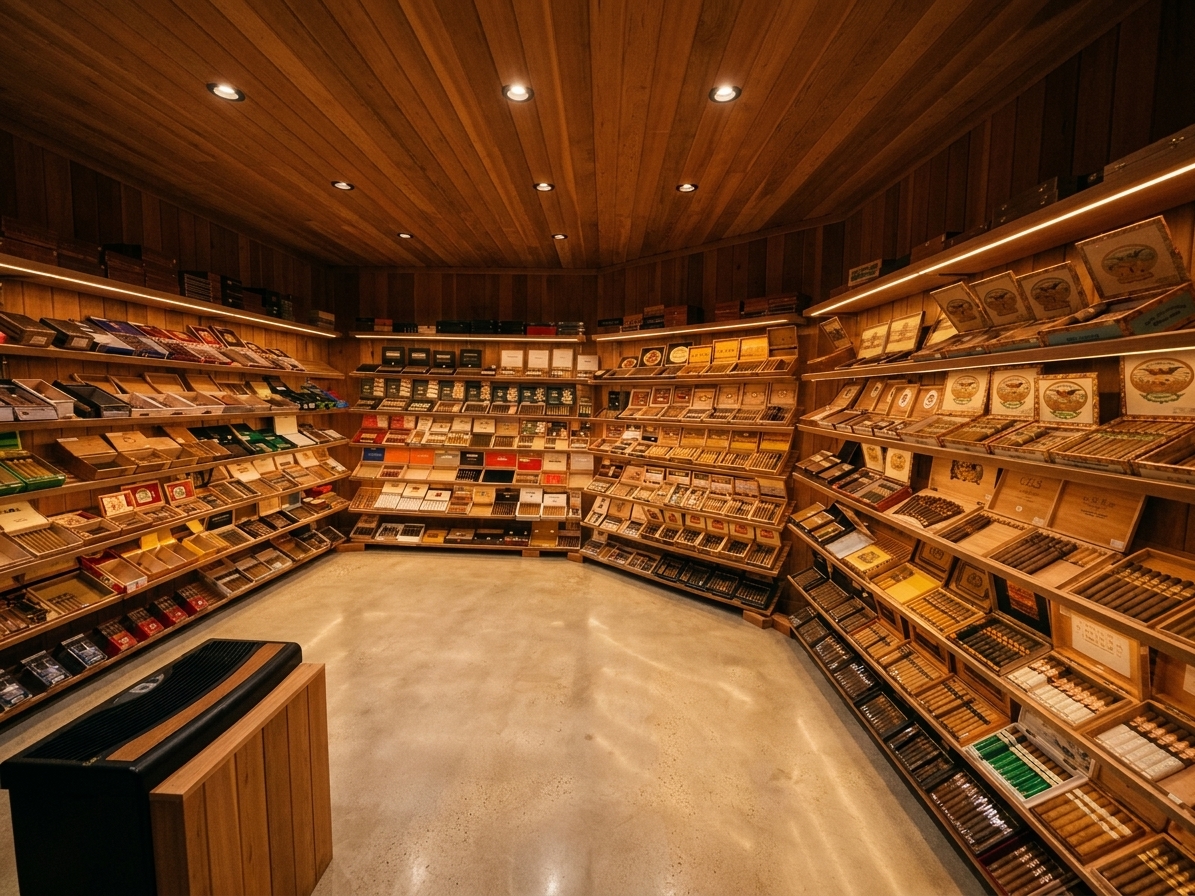
The gold standard is a real walk-in humidor, a cedar-lined room you can step into rather than a small case at the register. When you walk in, the air should feel noticeably cooler and moister than the sales floor. The shelves should be cedar. The cigars should sit loose so the wrappers age gently. A serious shop keeps that room steady year-round on a calibrated hygrometer and does not let it drift.
You do not need to memorize target numbers to judge this. Step into the room and trust your senses. If it feels dry, or if the cigars are sealed behind glass at room conditions, that is your answer. Our own walk-in humidor is built exactly this way, and the walk-in humidor guide breaks down what to look for in detail.
03 · Two: selection depth, not just a wall of boxes
Two: selection depth, not just a wall of boxes
A big wall is not the same as a deep selection. Depth means a shop carries several makers seriously, with multiple blends and sizes from each, so you can actually compare. It means a Padron section with more than one line, an Arturo Fuente run that goes past the entry blend, a Davidoff presence, and a boutique shelf that rotates as small-batch releases come and go.
Depth matters because your palate changes as you smoke more. A shop with real range grows with you, from a first mild Connecticut to a full Nicaraguan puro to an allocated release you waited for. A shop with one box of everything runs out of road fast.
- Several established makers carried in depth, not one cigar each.
- A range of wrappers, from Connecticut and Ecuador shade through Habano and Maduro.
- A range of sizes, so you can pick a quick smoke or a long evening cigar.
- A rotating boutique shelf, a sign the shop actually follows what is new.
- Singles available, so you can try before you buy a box.
04 · Three: staff who know the wall
Three: staff who know the wall
The best humidor in town is worth less if nobody can guide you through it. Good staff are the difference between guessing and learning. Ask for a recommendation and pay attention to the answer. Do they ask what you have enjoyed before, then point you somewhere specific? Or do they wave at the wall and let you fend for yourself?
You are not looking for a hard sell. You are looking for someone who will steer a first-timer to something mild and smooth, tell a regular what just landed on the boutique shelf, and be honest when a cigar is not the right fit. In a family-run shop you often get the same faces every visit, and they remember what you smoke. That continuity is worth more than any discount.
Test it on the first trip. A shop that gives you a real, specific recommendation, and gets it right, has earned the next visit.
05 · Four: freshness and turnover
Four: freshness and turnover
Even a well-kept humidor needs to move product. Cigars that sit for years, even in good conditions, are not the point of a retail shop, and slow turnover is a quiet warning sign. You want a shop busy enough that the inventory cycles, so what you buy is in its window rather than forgotten on a back shelf.
Look for the small tells. Bands should be crisp, not faded from long light exposure. Boxes should look handled, not dusty. The boutique shelf should actually change between visits. A shop that can tell you what came in this week is a shop where cigars do not sit still.
06 · Five: honest, marked pricing
Five: honest, marked pricing
Last, pricing should be clear and consistent. Prices should be marked or easy to get, the same from one visit to the next, with no pressure and no invented markups because you look new. Premium cigars are not cheap, and a fair shop does not pretend otherwise, but it also does not gouge.
A good shop will happily sell you a single so you can test a cigar before committing to a box, and will tell you honestly when a cheaper cigar smokes as well as a pricier one. That kind of straight dealing is how a shop earns regulars instead of one-time buyers.
Put the five together and the picture is simple. A real walk-in humidor, deep selection, staff who know the wall, fresh turnover, and honest pricing. Tobacco Shack in Buford has been built on exactly those since 1996, and if you want to see how the criteria play out against nearby shops, the comparison pages lay it out plainly.